
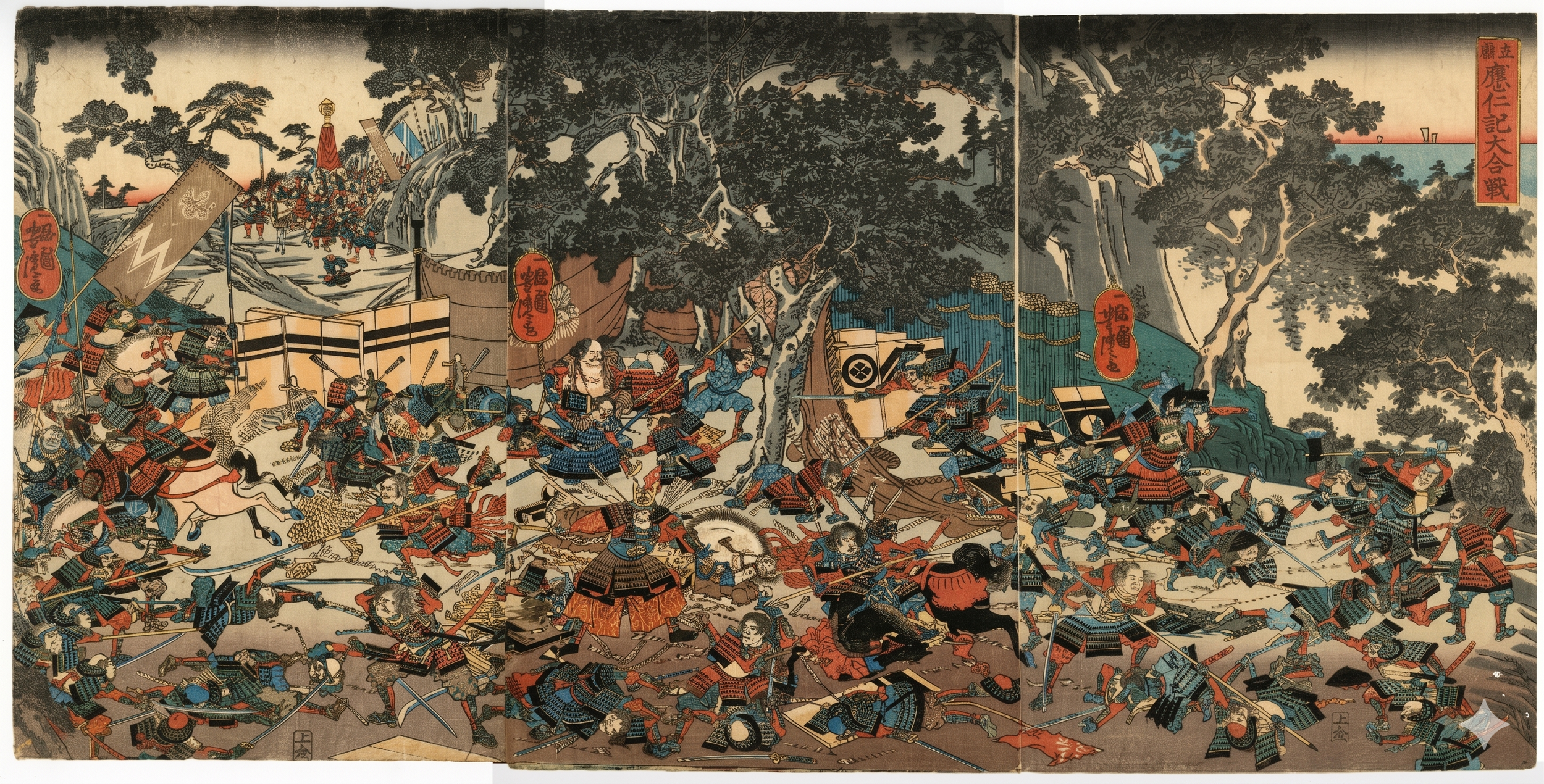
Clash of Clans, 1465: The Ikkō-ikki
APPROXIMATE COMMITTEE SIZE: 30 DELEGATES
The Ikkō-ikki find themselves at a critical moment in the turmoil caused by the Ōnin War, as the collapse of central authority and spread of civil conflict create the conditions for local leagues to emerge as political forces. Bound together by Jōdo Shinshū devotion, these loosely structured “leagues of one mind” draw strength from commoners, monks, merchants, and local fighters alike, and have begun to transform religious conviction into organized resistance under the influence of the Honganji branch. Yet that broad coalition also makes the movement difficult to control, as followers remain divided by regional loyalties, local ambitions, and competing alliances even while the movement seeks to challenge elite rule and secure a permanent place within Japan’s political order. If delegates can preserve unity, deepen popular commitment, and turn shared faith into durable political organization, they may succeed in transforming a growing uprising into lasting power rather than a passing wave of revolt.
CRISIS MANAGER: Keira Lozada
CHAIR: Adrian Evers
Issues to consider
Issue 1: Amplify Influence: The Ikkō-ikki are united through Jōdo Shinshū devotion and shared resistance to elite rule. How can the movement keep ordinary people mobilized and committed while turning religious energy into lasting political power?
Issue 2: Build Strategic Alliances: The Ikkō-ikki draws strength from a broad and diverse following, and their allegiances could shift. Which powers should the Ikkō-ikki ally with, and how can they avoid backing a side that weakens their autonomy or compromises their cause?
Issue 3: Maintain Unity: The Ikkō-ikki are loosely structured leagues made up mostly of commoners with varied aims and allegiances that can pull the movement in different directions. How can the Ikkō-ikki keep peasants, monks, merchants, and local fighters unified around one cause without the movement fracturing from within?

About the Chair
Adrian Evers is a proud member of the class of 2028 in the Walsh School of Foreign Service at Georgetown University, majoring in Science, Technology, and International Affairs (STIA). Originally from Jersey City, NJ, he came to D.C. after living in Germany for over five years. It was at his German high school where he first encountered MUN, competing for three years and even taking part in an international conference in Genoa, Italy. Outside of MUN, he can be found devoting time to pre-law work or engaging with energy policy projects. Adrian is also very passionate in music, playing cello for the GU Orchestra and singing with the Georgetown Chimes. When he has free time, he loves e-scootering around D.C. or strolling around town with friends. He is very eager to serve as an NSA Chair for NAIMUN LXIV this year and create a memorable experience for all!
About the Crisis manager

Julia Grimwade is a member of the Class of 2028 in the College of Arts & Sciences at Georgetown University. She is double-majoring in Government and Theology with a concentration in Religion, Politics, and the Common Good, and is minoring in Spanish. She is a proud midwesterner from Cleveland in the great state of Ohio.
Within Georgetown’s International Relations Association, Julia has served as Under Secretary-General for Historical Crisis at NAIMUN LXIII, Crisis Manager at NCSC LIII and DistrictMUN VI, Chair at NCSC LIV, and crisis analyst at NAIMUN LXII. She is so excited to continue her involvement in the best organ at NAIMUN!
Outside of MUN-related clubs, Julia is on the Georgetown club rock climbing team and is head of Media and Marketing for If You’re Reading This. In her free time, she enjoys spending time outdoors, reading, and listening to 70s rock. She is planning to attend law school after completing her undergraduate degree.
Julia is very excited to be a part of NAIMUN for her third year! She can’t wait for conference weekend and is very excited to work with the delegates!