
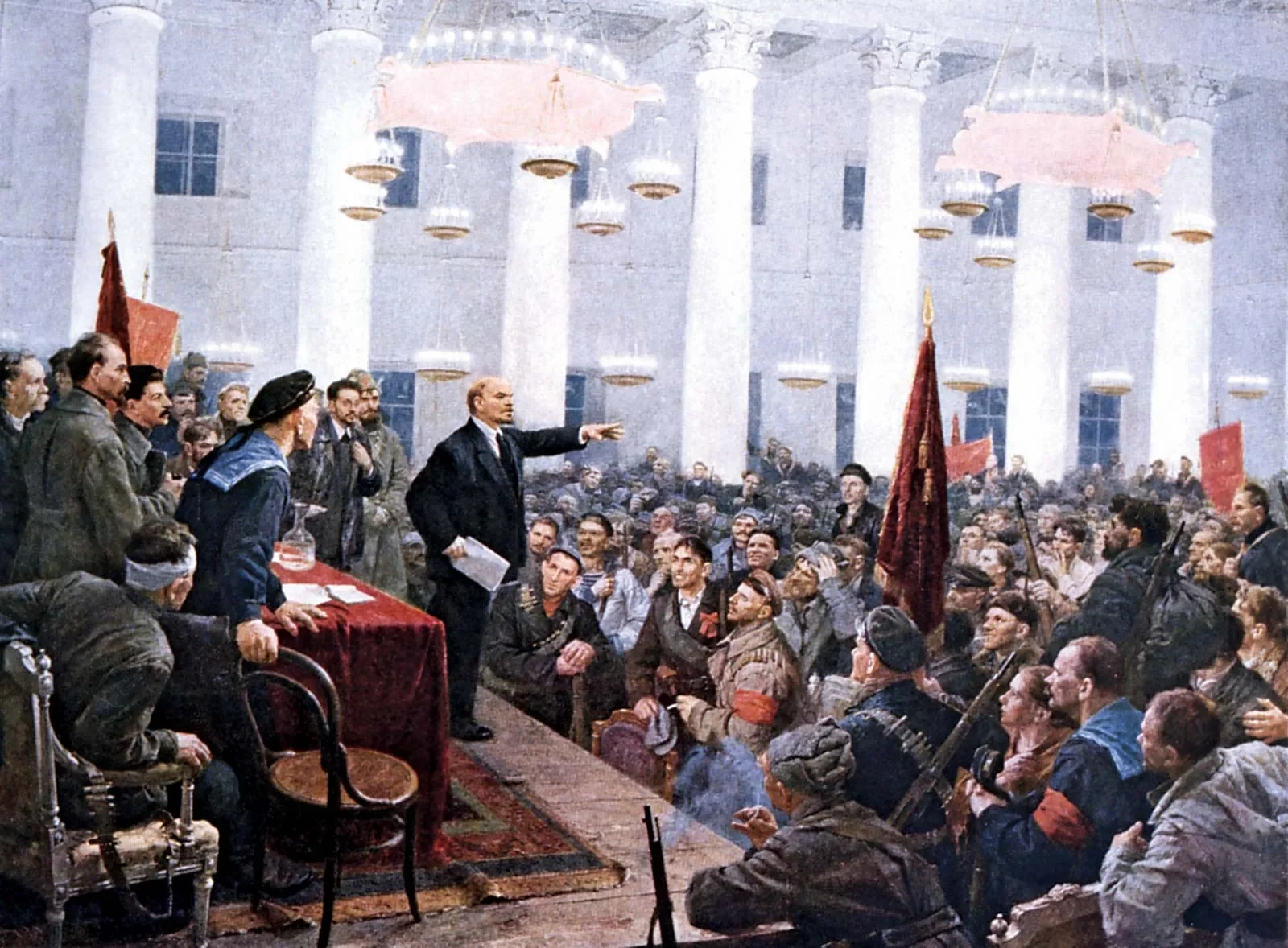
JCC: Bolsheviks and Breadlines: The Petrograd Soviet
APPROXIMATE COMMITTEE SIZE: 30 delegates
The Petrograd Soviet has emerged as the central political organization of the post-revolutionary moment, composed of elected delegates of workers and soldiers seeking to establish a government that reflects the interests of those who brought the revolution about. Within the Petrograd Soviet, divisions have emerged between moderates who favor cooperation with the Provisional Government and radicals pushing for deeper and more immediate social and economic transformation. The committee must debate the shape reform should take and how far they are willing to push Russia’s political and social transformation. With three factions pulling Russia in different directions, the question is not only what kind of government will emerge, but who will be left standing to shape it.
CHAIR: Julia Krause
CRISIS MANAGER: Tyler Francisco
ISSUES TO CONSIDER
Issue 1: Governmental Structure: Both sides of the JCC will be locked in a power struggle for who maintains power in the new order dawning in Russia–will the nobles and elites can retain dominance or will the Proletariat masses take over the state and establish a new system relegating those elites to positions of equality with the common man? In the wake of the blank slate created by the February Revolution, delegates must design the new governmental systems in Russia.
Issue 2: Economic Crisis: Russia’s economy was already in crisis after WWI and the collapse of centralized authority has only exacerbated these problems. Inflation is soaring, industrial production has fallen, and widespread unemployment and labor unrest destabilized urban centers. Delegates must address these problems if they want any institutional change to endure.
Issue 3: Food Shortage: Harsh weather, a decline in planted acreage, and the breakdown of transportation networks have combined in a perfect storm, leading to acute shortages and long bread lines. As one of the agitators behind the February Revolution, how will Russia’s next government solve the food crisis and the instability it caused?

About the Chair
Julia Krause is a sophomore from Boulder, Colorado. She is majoring in International History at Georgetown’s School of Foreign Service, as well as minoring in Art History. She has been in the MUN community since her freshman year of high school, and has been part of the collegiate circuit since last year. Outside of MUN, she participates in theater and plays guitar. She is obsessed with F1 and is always willing to talk about it (unless Oscar Piastri isn’t doing well, then it’s better not to ask).

About the Crisis manager
Tyler Francisco is a senior in Georgetown’s College of Arts and Sciences studying Political Economy and Spanish. She grew up in Fort Lauderdale, Florida. Throughout high school, Tyler enjoyed competing in and staffing Model UN conferences, and has continued to stay active through NCSC and NAIMUN. Some of her interests include going to concerts, watching movies, going to the gym, and trying different Ben and Jerry’s flavors (favorites include Cherry Garcia, the Tonight Dough, and Chocolate Fudge Brownie). She is looking forward to staffing NAIMUN and seeing how the delegates in the Petrograd Soviet work together towards success during this conference.