

(All Women/GNC) Keeping up with the Kapoors: Women in Bollywood, 1988
APPROXIMATE COMMITTEE SIZE: 30 delegates
The Kapoor family is widely considered the "First Family" of Indian cinema, with a 97-year legacy spanning over four generations. Despite the family’s own acting empire, an unspoken expectation long held that Kapoor women not act in films. However, in 1988, Babita Kapoor separated from her husband Randhir Kapoor, a decision that allowed her two daughters to have careers in Bollywood. In this committee, delegates will represent members of the Film Federation of India, including producers, actors, directors, and censorship advisors, and will use Babita’s rebellion as a catalyst to discuss the wider role of women in Indian cinema.
Note: NAIMUN’s “all-women” crisis committee is designed to amplify and empower the voices of women in a unique crisis setting. Delegates in this committee will exclusively represent women as they debate and simulate a topic specifically chosen to center the experiences of women. In the spirit of this committee, NAIMUN asks that all those participating in the all-women committee are female or gender non-conforming delegates.
CHAIR: caroline sippel
CRISIS MANAGER: mahika sharma
ISSUES TO CONSIDER
Issue 1: Fair Contracts: In the 1980s, Bollywood actresses' rights were limited by a male-dominated, patriarchal industry structure that treated women as replaceable commodities and allowed them only minimal control over their own careers and finances. How should the misrepresentation of women be addressed, considering previous limits on female agency and media pressures against women?
Issue 2: The Representation of Women in Indian Cinema: Bollywood films were centered on the male leads, with female characters almost exclusively cast as the virtuous, sacrificial heroine or the hypersexualized seductress. In the social uncertainty of the times, these flat female characters represented traditional family values and easy villains, reducing women to objects and symbols, lacking the complexity of the male characters. Is it possible for the film industry to remedy these culture-driven inequalities? If so, how?
Issue 3: Safety, Harassment, and Workplace Protections: The lack of formal protections for actresses left many vulnerable to exploitation, coercion, and unsafe working conditions. With few avenues to report abuse or hold powerful figures responsible, these risks often went unaddressed. How should institutional safeguards be implemented?
LEARNING OBJECTIVES
Learn about the beginnings and proliferation of aviation, especially regarding women in aviation.
Understand how to pursue a common goal amongst people you are in direct competition with.
Develop strategy and game theory skills as it pertains to planning a competition.

About the Chair
Caroline Sippel is a member of the Walsh School of Foreign Service class of 2027, with a major of Culture and Politics and a minor in Public Health. She is originally from St. Louis, Missouri, but currently lives in Reston,Virginia. Caroline served as the Under-Secretary-General of Historical Crisis for NAIMUN LXII, so she is honored to have spent all of her NAIMUNs in the best organ out there. If some of you competed all of the way back then, make sure to say hi! She also served as the Chief of Staff for GIRA Local, Georgetown’s conference for middle school students, and as a staffer for NAIMUN LXI and NCSC LXI, NCSC LXII, NCSC LXIII, and NCSC LIV, GU’s college conference. Mahika thinks Caroline is poorly behaved and usually makes her be in the backroom, so please be kind as she experiences daylight for the first time. Besides Model UN, Caroline is a member of Georgetown’s chapter of Kappa Alpha Theta, a host on Georgetown's radio station, a cast member of Georgetown’s Rocky Horror Picture Show, a dancer for Rangila, and a lifeguard for the on-campus pool. Her greatest passions are caffeinated beverages, rock music, and her dog. This committee is a combination of three of Caroline’s favorite things: pop culture, Bollywood, late-twentieth century history. NAIMUN has been one of Caroline’s favorite parts of Georgetown, and is so incredibly excited to spend her final one with the staffers and delegates of Keeping up with the Kapoors!
About the Crisis manager
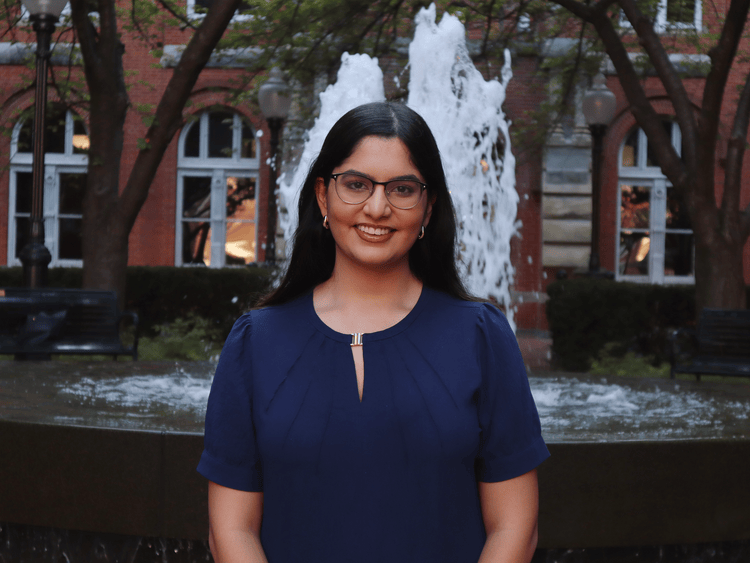
Mahika Sharma is a member of the Class of 2027 studying International Politics in the Walsh School of Foreign Service, with minors in Journalism and Diplomatic Studies. She hails from Fairfax, Virginia, where she first found herself bitten by the MUN bug in seventh grade. She’s since brought her passion for motions and moderated caucus to Georgetown, where she has served as the Under-Secretary-General of Non-Traditional Crisis at NAIMUN LXII and the Director-General of NAIMUN China VII. She has also had the pleasure of serving as GIRA’s Chief Global Strategist and Chief Human Resources Officer, supporting the organization’s international programming and abundance of staff as best she can. While she was on a bit of a chairing streak, Mahika’s excited to finally let Caroline take the reins in the front-room and serve as your CM instead. Outside of MUN, you can find Mahika advocating for First Amendment rights with The Free Speech Project, reviewing restaurants around the city for her campus radio show, the d.c. dish, or writing for one of Georgetown’s student newspapers. She also loves watching Bollywood movies (K2H2, anyone?) and scouring Bollywood gossip forums. Having spent her spring semester abroad in Ireland last year, Mahika is so excited to make her triumphant return to NAIMUN with Keeping up with the Kapoors for one final hurrah!