
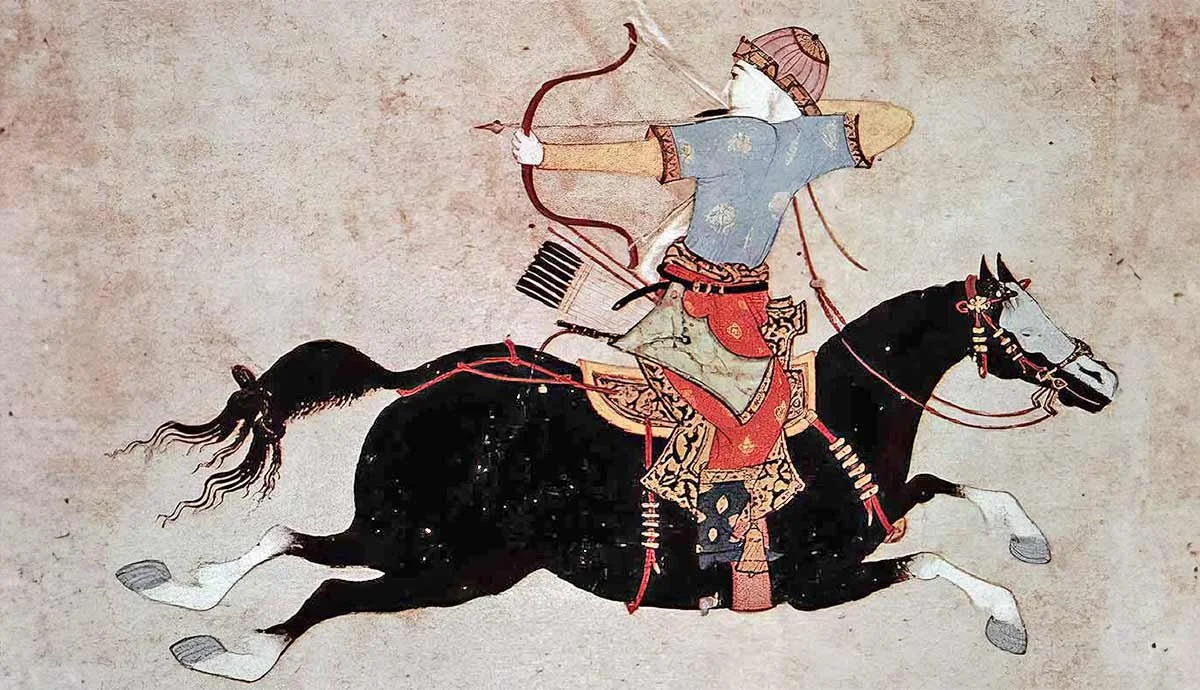
Peace, Love, and Horses: The Mongol Empire, 1235
APPROXIMATE COMMITTEE SIZE: 30 delegates
Following the death of Genghis Khan in 1227, his third son Ögedei inherited leadership of the Mongol Empire. With decades of military expansion largely behind them, the empire began shifting its focus from conquest to consolidation. Mongol control over the Silk Road had made it central to global trade, carrying goods, currencies, languages, and religions across continents. Ögedei sought to cement this new era by establishing Karakorum as the first permanent Mongol capital, marking a significant departure from traditional nomadic life and a growing embrace of sedentary governance. This period of relative stability, later known as the Pax Mongolica, stood in contrast to the bloodshed that had built the empire, bringing new opportunities alongside new challenges in governing a vast and diverse collection of peoples and territories. In this committee, delegates will represent members of Ögedei's court, including military commanders, trade advisors, and regional governors, and will work to balance the pressures of foreign alliances, expanding trade networks, and internal demands as the empire determines its next steps.
CHAIR: Elizabeth Koenck
CRISIS MANAGER: chloe phillips
ISSUES TO CONSIDER
Issue 1: Creating a Multi-Ethnic State: As the newly established permanent capital of the Mongol Empire, Karakorum is the hub of trade, people, art, and ideas, each with their own identities and backgrounds. In what manner can a multi-ethnic state be created and maintained without causing conflict between groups or individuals?
Issue 2: Eurasian Economic Interests: The transition from nomadic to sedentary lifestyles will impact the relationship between the Mongols and the Silk Road. How can you reconcile this major lifestyle change with the economic transformation and impacts that will come as a result? In what ways can you facilitate economic growth in the new city?
Issue 3: Potential Political and Economic Intrusion: With new foreign empires and a transforming Silk Road, the Mongol Empire’s prosperity is threatened by potential political and economic rivals. To what extent is co-existence possible? If not, how will the empire compete to regain economic and political control?
About the Chair
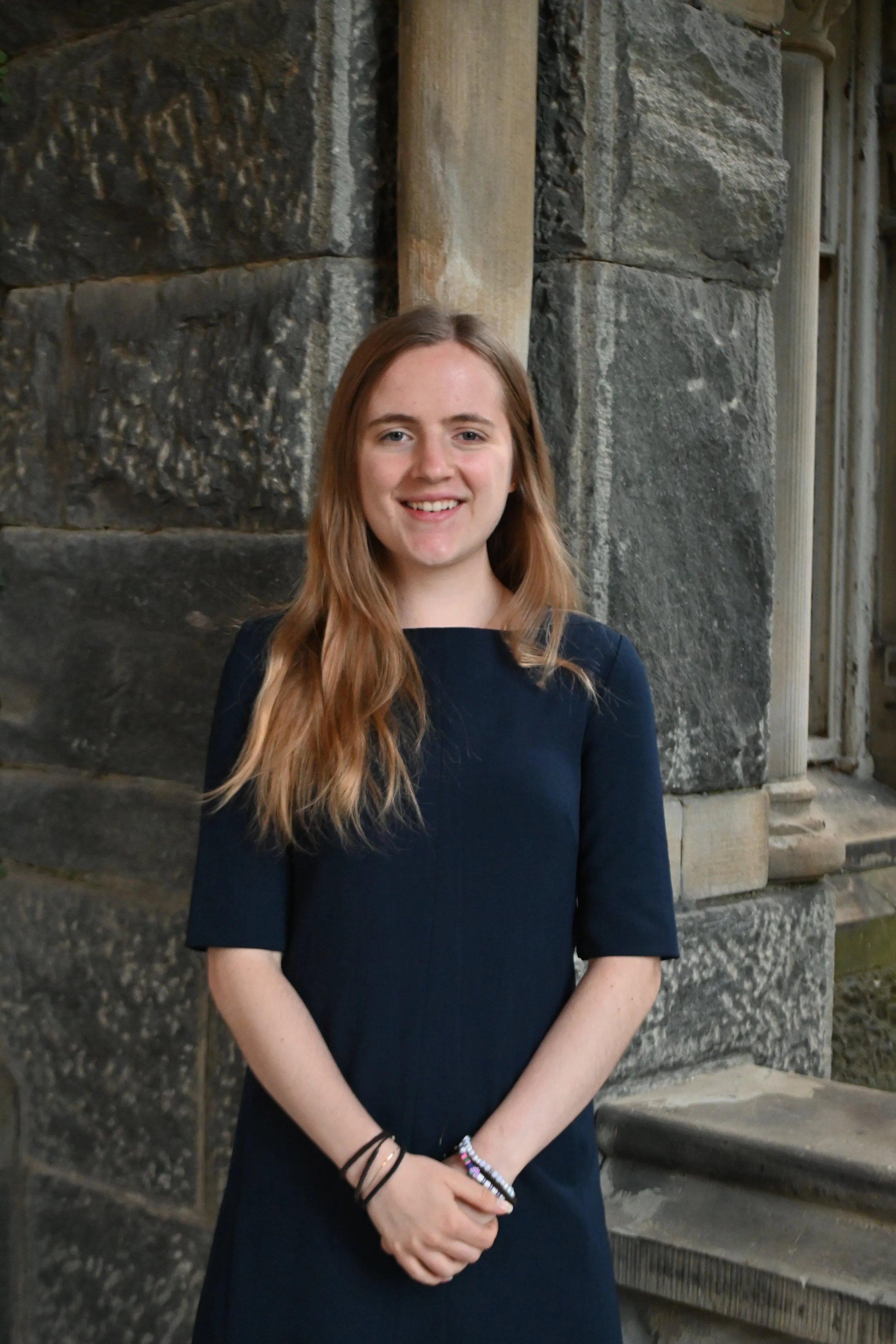
Elizabeth Koenck is a fourth year in Georgetown University's Walsh School of Foreign Service where she studies International Politics with a focus on Human Security. Elizabeth is also pursuing a Certificate in Diplomatic Studies and a Minor in Economics. On campus, she is the Chair of the International Relations Club, a Teaching Assistant for Maps of the Modern World, and a member of the Model United Nations team. After high school, Elizabeth lived abroad in Morocco with the National Security Initiative for Youth where she learned Moroccan and Standard Arabic. In her freetime, Elizabeth loves to hike in her native Colorado, read fantasy and science fiction novels, and bake exciting new recipes.

About the Crisis manager
Chloe Phillips is a member of the Class of 2029 in the School of Foreign Service, majoring in Science, Technology, and International Affairs with a concentration in Biotechnology and Global Health and a minor in Global Development. She is from Dallas, Texas and absolutely loves H-E-B and Buc-ee’s.
This will be Chloe’s second NAIMUN. She previously staffed as a crisis analyst for NAIMUN LXIII for the La-La-Labor Committee in the Contemporary Crisis organ, and also for NCSC LXIV in Enron Board of Directors, 1992 in the Non-Traditional organ. Chloe is excited to explore niche topics through crisis committees.
Outside of NAIMUN, Chloe serves as a Faculty Interviewer for Georgetown’s Scientific Research Journal, plays for the club volleyball team, is in GU’s Effective Altruism club, and will talk for hours about everything infectious diseases and biosecurity. She is honored to serve as your NAIMUN LXIV Crisis Manager!