
Amy Liu, Press Corps 25
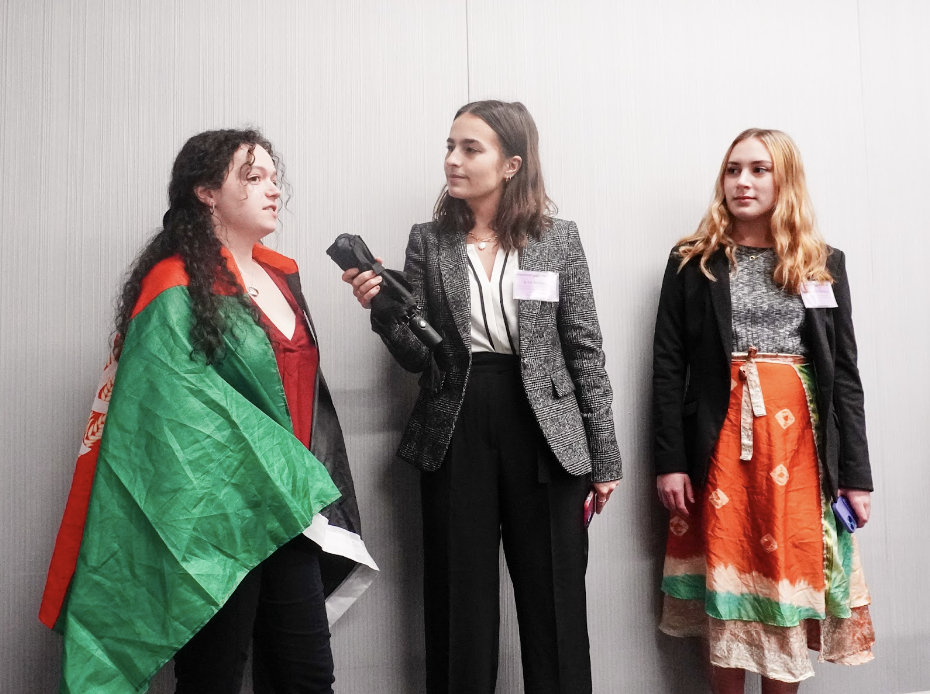
REVOLUTIONARY ASSOCIATION OF WOMEN OF AFGHANISTAN, Historical Crisis — Soviet Union soldiers have been placed in Jalalabad, Afghanistan to provide protection and food to Afghans in need, in accordance with the newly implemented Afghan-Soviet Friendship Treaty. Across Jalalabad, cries of outrage ring loud in response through protests on the streets.
“I don’t believe the Soviets are here to protect us,” Amara, an Afghan mother and student, said to the BBC. “They are here for their own power, their own control.”
Following the protests against the ASFT, the Revolutionary Association of the Women of Afghanistan convened to address next steps to take. RAWA is an organization that promotes womens’ rights through means such as working in refugee camps and organizing protests. Just prior to the enactment of the ASFT, RAWA passed four directives regarding acid attacks against women.
Many women in RAWA echoed the sentiment that foreign intervention would be detrimental to Afghanistan and especially to Afghan women, who have endured decades of oppression. In particular, a key mission of RAWA has been to resist Soviet influence ever since the Soviet Union’s invasion of Afghanistan in 1979. Every year, RAWA has held a protest against the Soviet Union on the anniversary of the invasion.
“Historically, any kind of intervention within Afghan politics has only resulted in death,” Hajira, a mobile doctor, said to RAWA. “I think the Soviets only want control within our country. We must put elected women in positions of power.”
Likewise, Pakistani journalist Anis Haroon stated, “We cannot let the Soviets now come in and push out Afghan leaders.”
However, popular singer Hamida “Rukshana” Assil is hopeful for the outcome of the treaty if cautious diplomacy is upheld.
“Our Afghan leaders have never fought for us throughout history,” Assil told the NAIMUN Daily. “Realistically, even if we don’t agree with the Soviets, we can help them serve our own interests.”
Shortly after the anti-Soviet protest, counter-protestors took to the streets to support the ASFT. Some were optimistic for the changes Soviet intervention would bring while others were relieved at the potential of leaving the current state of Afghan politics behind.
“I am tired of Sharia law.” Sharba, a student, said to the BBC. “I am tired of our religious leaders telling us what we can or cannot do. We need to get rid of all the religious leaders and instead, we need to support the Soviets who are here to help us, save us and introduce us to a new lifestyle where women can once again have equality.”
One thing is for sure — it will take time and action for peace to be restored in Afghanistan. The ASFT is only the start — for better or for worse.