
Jacob Cross, Press Corps 3
AD-HOC COMMITTEE of the SECRETARY-GENERAL, Non-Traditionals – With the announcement of the Spanish Civil War, delegates faced incredible troubles trying to advance the status of women as the split in government prevents the entirety of Spain from seeing the potential benefits of any measures passed. The once entirely unified committee is itself divided, continuing to splinter over individual ambitions and the political struggles of wartime.
The split between the Republican Party and those endorsing a neutral approach continues to develop with the war encouraging more support to the Republicans, although many are still advocating remaining neutral with both sides, hoping to enable flexibility based on the outcome of the war.
Three members of the committee, Mercedes Composada, Amparo Poch y Gascon, and Lucia Sanchez Saornil were also contacted by mysterious outside sources which spread even more rumors amongst the committee as they refused to elaborate on what the messages contained. Although placed on trial, the insistence to maintain strict secrecy of the message led to suspicion from the entire rest of the body, leaving many disappointed and distrustful. As anarchists, this committee resists any hierarchical oversight, meaning these three delegates withholding information appeared as if they were establishing themselves as superior to all of the others, which many found insulting.
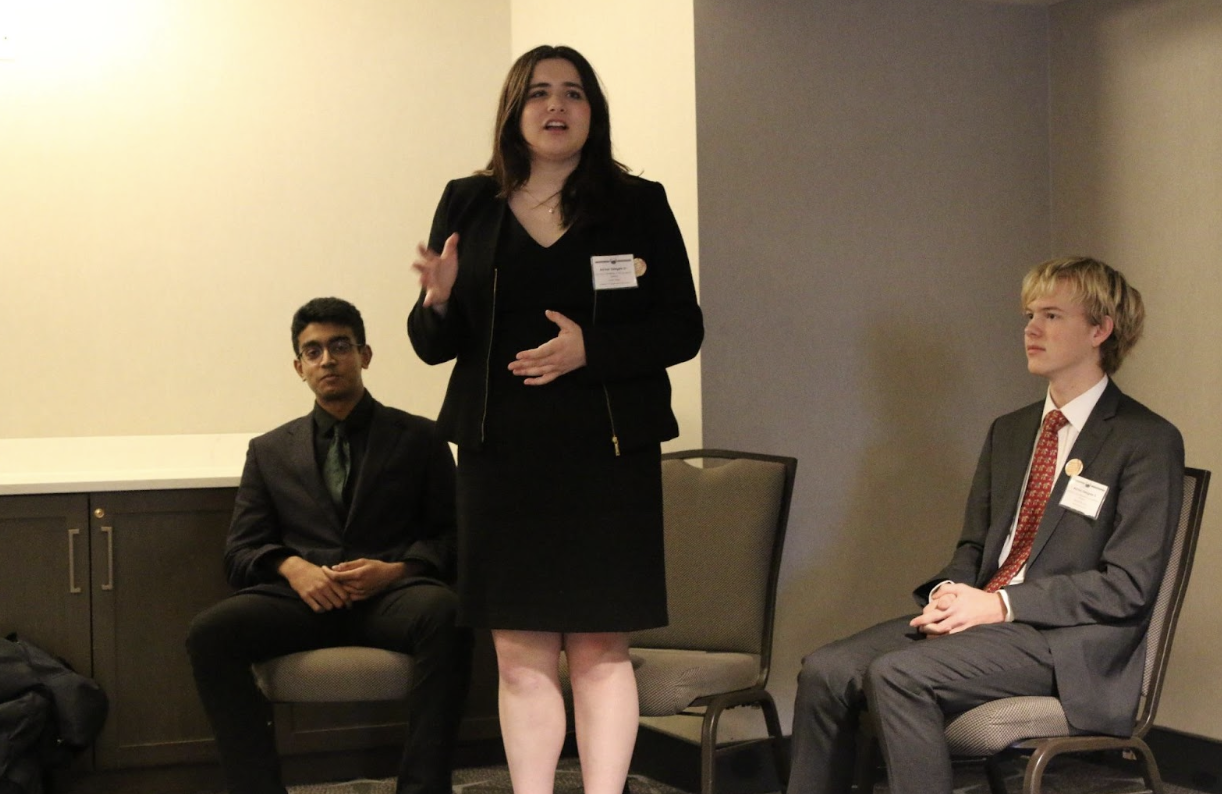
Saornil, Composada, Gascon (left to right) defend themselves on trial
Matilde Piller, a wealthy mother known for her advocacy of greater female education, remained nervous about the three delegates, although she does still have sympathetical trust for the Mujeres Libres founder, Mercedes Composada.
“I don’t fully trust anyone, but I think, particularly Composada, she genuinely has the best interests at heart. I’m not sure about the other two guys, but I trust her,” Piller told the NAIMUN Daily.
However, the three delegates ultimately revealed the messages were a prank from the crisis manager and simply told them to “have a nice day,” proving their innocence. Although the letters were not filled with vital information, the trial itself demonstrates the extent to which the committee is distrustful and quick to accuse when knowledge shared directly with individuals is not made transparent.
With rumors swirling around the trial, the three founders of the Mujeres Libres, Angustias Lara Vargas, Mercedes Composada, and Dolores Arizcuren were confronted with another even larger issue– a failed arrest attempt. These three, while not wholly aware of their crimes, were thus forced to argue for their own safety, further dividing the committee. Events like these continue to derail the body, where unity seems to be placed on trial after each crisis.