
Blood in the Water: Theranos Board, 2015
Approximate Committee Size: 30 Delegates
At its peak, Theranos was valued at nearly $9 billion, its founder was hailed as the next Steve Jobs, and its technology was poised to revolutionize healthcare diagnostics through droplets of blood. Behind closed doors, however, the science behind it never worked. As investigative journalists and federal regulators began closing in on the fraud between 2015 and 2018, the Theranos board — composed of former secretaries of state, retired generals, and prominent investors, but conspicuously lacking scientists — faced an uncomfortable reckoning: how much did they know, when did they know it, and what did they choose not to ask?
Founded in 2003 by Elizabeth Holmes, who left Stanford at 19 to found the company, Theranos Inc. claimed they had developed a compact machine (the “Edison” device), which could perform a wide range of accurate and rapid laboratory tests with a finger prick’s worth of blood. This innovation promised a cheaper, faster, and more accessible way to detect diseases early, reducing the need for traditional labs and allowing patients to access simplified blood tests in retail settings. Holmes went so far as to claim that the technology was already in use by the military. That promise did not hold. In 2015, the Wall Street Journal published a series of articles by reporter John Carreyrou alleging that the Edison device was largely incapable of performing the tests it claimed. Rather than using its proprietary technology, the company had been quietly running most samples on conventional third-party machines. The exposés triggered a cascade of consequences, from laboratory inspections to collapsed partnerships. Federal criminal investigations followed, and in 2018, Holmes and former company president Ramesh “Sunny” Balwani were indicted on multiple counts of wire fraud and conspiracy.
This committee drops delegates into the Theranos boardroom at the precise moment Carreyrou's reporting goes public and regulators begin knocking. Delegates, who will represent a mix of board members, legal counsel, and major investors, must navigate a crisis that is simultaneously legal, ethical, and reputational. With patient safety compromised, billions of dollars of investments at stake, and criminal exposure looming, delegates will be forced to confront the fundamental tension between institutional self-preservation and accountability. They will grapple with what obligations they owe to shareholders, to patients, to regulators, and to the truth, and whether those obligations can coexist at all.
CHAIR: Sophia Alexandrou
Crisis Manager: Valli Pendyala
ISSUES TO CONSIDER
Issue 1: Corporate Governance and Oversight Failure: The Theranos board was notably lacking in scientific expertise, raising serious questions about due diligence and the culture of Silicon Valley. How should the board respond to allegations that it failed to ask the right questions? What internal reforms, if any, can restore credibility, and how do board members balance personal legal exposure against collective institutional responsibility?
Issue 2: Patient Safety and Ethical Accountability: Thousands of patients received potentially inaccurate test results that may have affected their medical treatment. What obligations does the company have toward those patients? How should Theranos manage public disclosure and the ethical fallout from prioritizing growth over validated science?
Issue 3: Fraud, Liability, and Strategy: Delegates must consider the next steps for the company and, more selfishly, for themselves. With federal investigators circling and civil suits mounting, will they choose to admit fault and mitigate fallout, attempt to scientifically improve their product, or deny understanding and feign ignorance?
About the Chair
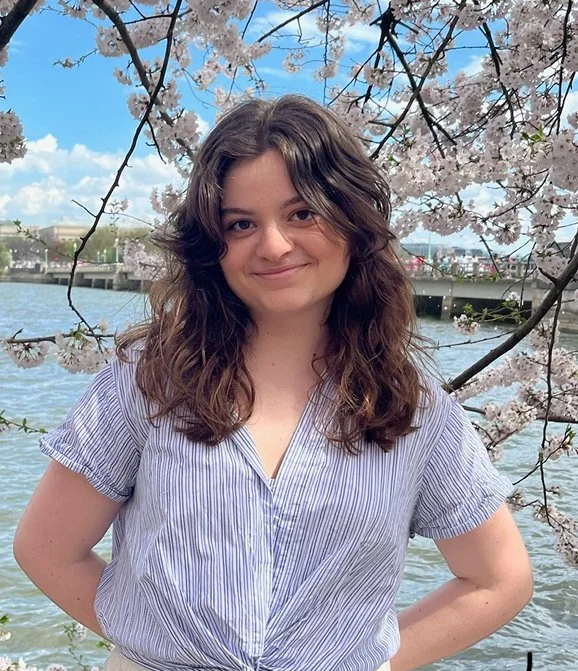
Sophia Alexandrou is in the School of Foreign Service’s class of 2027, majoring in International Politics with a concentration in International Law, Institutions, and Ethics, and minoring in Modern Greek and Environment & Sustainability. She has previously participated in NAIMUN as a Rappetour and Chair. Outside of Model UN, she is involved in Sunrise Georgetown, GREEN, theater, and the Hellenic Society. In her free time, you can find her listening to a Broadway musical cast album, going on walks, and doing jigsaw puzzles. She is so excited to welcome you to DC and serve as your chair this year!
About the Crisis Manager
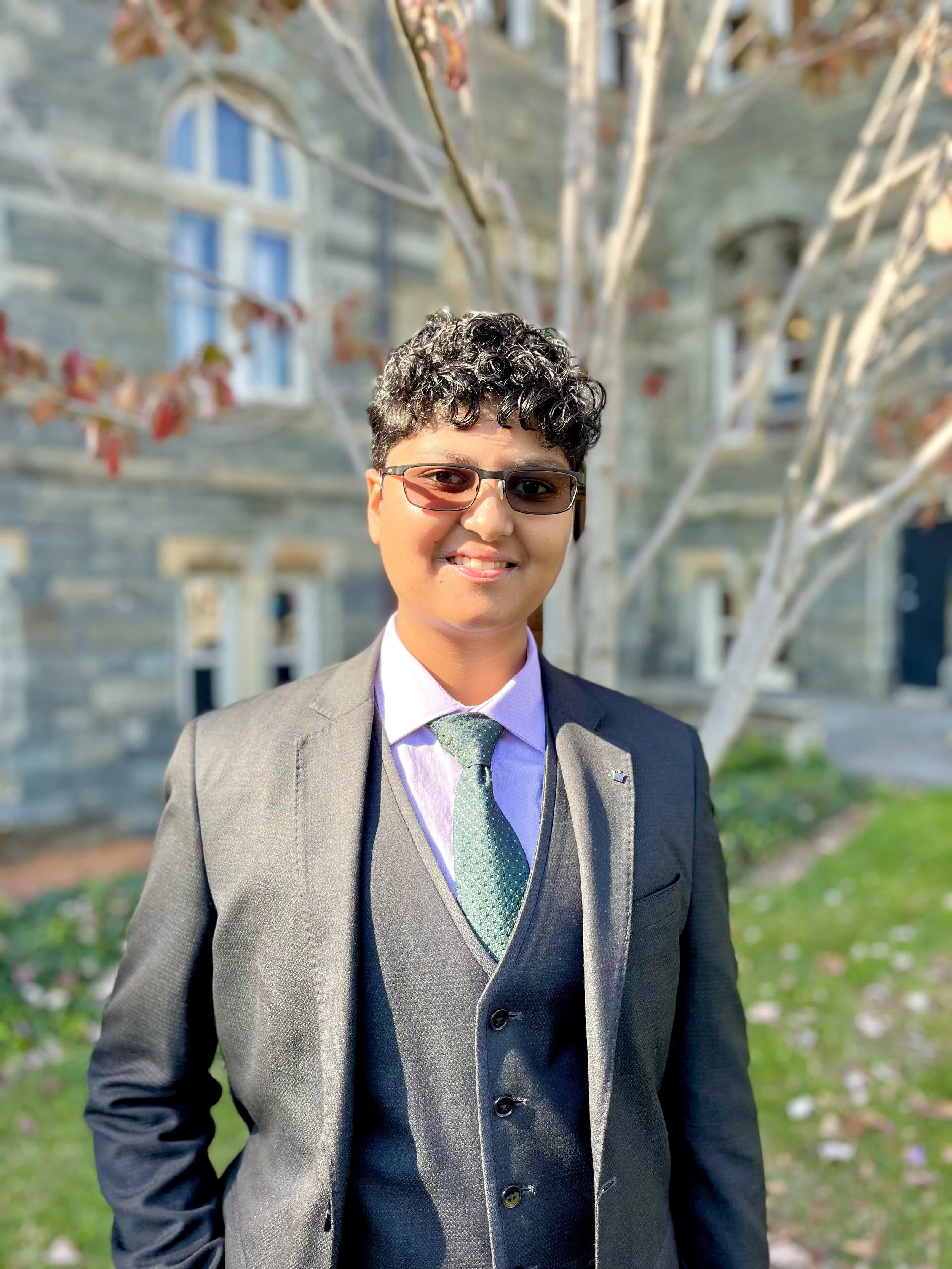
Valli Pendyala is a member of the School of Foreign Service’s class of 2027. They have been very involved with Model UN throughout their time at Georgetown, having previously served as NCSC LII’s Director of Operations and GIRA Local’s Chief of Staff and having staffed NCSC LI and NAIMUN LXI, LXII, and LXIII. Outside of Model UN, they work for Campus Ministry in the Office of Dharmic Life, sing tenor in the choir, and are being slowly consumed by their thesis. In their free time, you can find them trying to finish their annual 52-book reading challenge, going on food-related sidequests, or asserting that if a crime is funny, it should be legal, actually. They are very excited to serve as your crisis manager and cannot wait to welcome you to DC and NAIMUN LXIV!