
JJ Dove, Press Corps 16
THE KOHIMARAMA CONFERENCE, Historical Crisis — As the Kohimarama Conference continues through mid-July 1860, new conflicts with the French in New Caledonia go unaddressed. British-Maōri infighting stalls negotiations, and collaboration between the two looks increasingly unlikely.
The French territorialized New Caledonia in 1853 as a penal colony, but despite its proximity to New Zealand and the pre-existing aboriginal Maōri presence there, French actors have remained largely unconcerned with British-Maōri relations in the past.
Then, a Maōri ship docked on the island. Maōri disguised in British military uniforms attempted to provoke the aboriginal people and French detainees imprisoned there with calls to join them in rebellion against the British.
Believing these agitators to be British military infringing upon their territory, the French dispatched ships from their own navy to Auckland, New Zealand, threatening to shell British actors (and collaterally, the Maōri people) there.
As delegates to the Kohimarama Conference scrambled to resolve the crisis, initial solutions to diffuse the conflict failed. However, under threat of dismissal by the British prime minister, British representatives issued a formal apology to the French and withdrew their forces.
Despite its efficacy, how exactly this resolution was executed remains a mystery, as the British military was never involved in the conflict. Its forces, therefore, were unable to be withdrawn, since Maōri agitators in British military dress bore the true responsibility for these events.
Even as these dubiously legitimate conciliatory measures brokered peace, one of the Maōri agitators involved in the initial venture to New Caledonia detonated a bomb just three and a half miles away from the New Caledonian prison. While no fatalities or injuries occurred, this development has unraveled any progress made towards French-British-Maōri conflict resolution.
Despite the gravity of this development, internal discord among delegates to the Kohimarama Conference has turned their attention away from the French.
The Native Land Court Intervention, unrelated to the New Caledonian crisis, reached the floor for a committee vote. Presented by Tamati Waka Nene and Wiremu Patene, it addresses disputes over British-Māori land exchange in New Zealand. Sponsors of the directive desire that plots of land be exchanged via purchase and sale, rather than forceful acquisition.
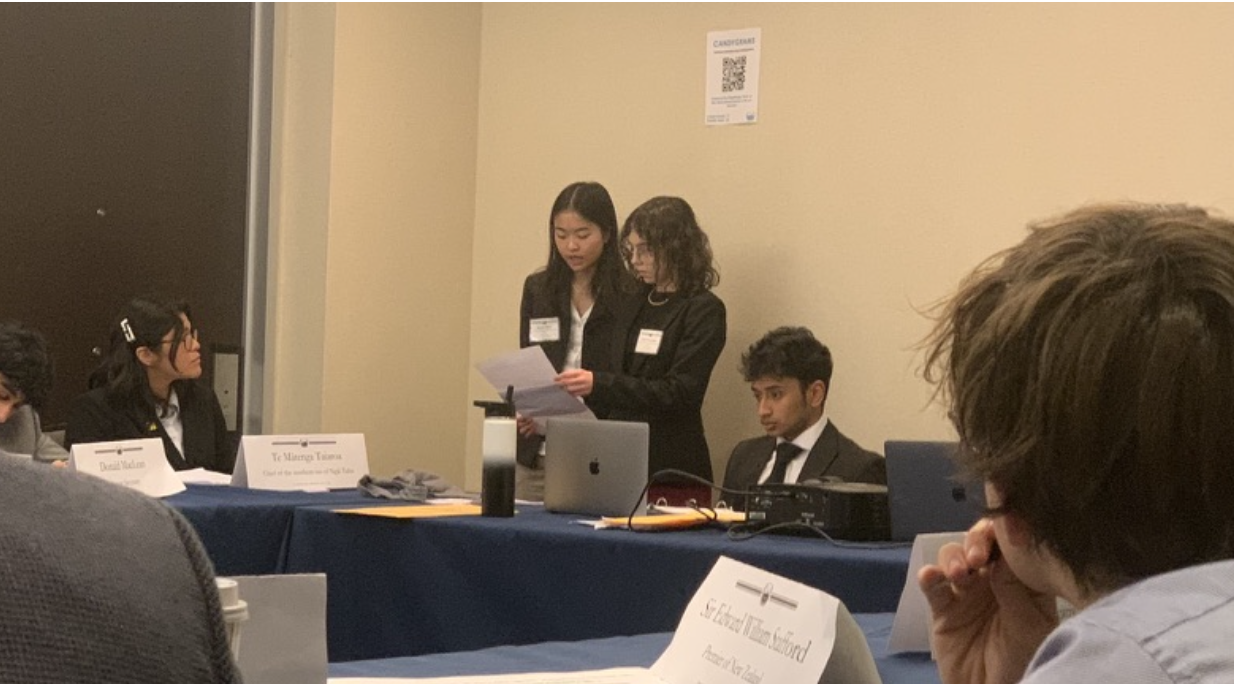
Delegates Tamati Waka Nene and Wiremu Patene present their Native Land Court Intervention directive in the Kohimarama Conference.
Despite the arguments of Paora Tūhaere and Te Mānihera Poutama, alleging that regulating the sale of land would increase collaborative efforts in both parties, many stood in opposition to the proposal.
“We do not need to submit ourselves to some sort of international or inter-tribal authority that deprives us of our own sovereignty,” said Tohi Te Ururangi.
Wiremu Tamihana, against the Native Land Court Intervention, chastised the delegates for their inattention to the French conflict.
“This does not address the crisis update whatsoever. The crisis update had to do with militia activity, however, this is a land reform directive, and we shouldn’t be wasting resources on it.”
When the proposal was put to a vote, it failed, with far more than the requisite majority of thirteen voting against. Similar issues of infringement on sovereignty and irrelevance to the conflict with French forces caused a second directive on the floor, concerning “executive use of railroads”, to fail as well.
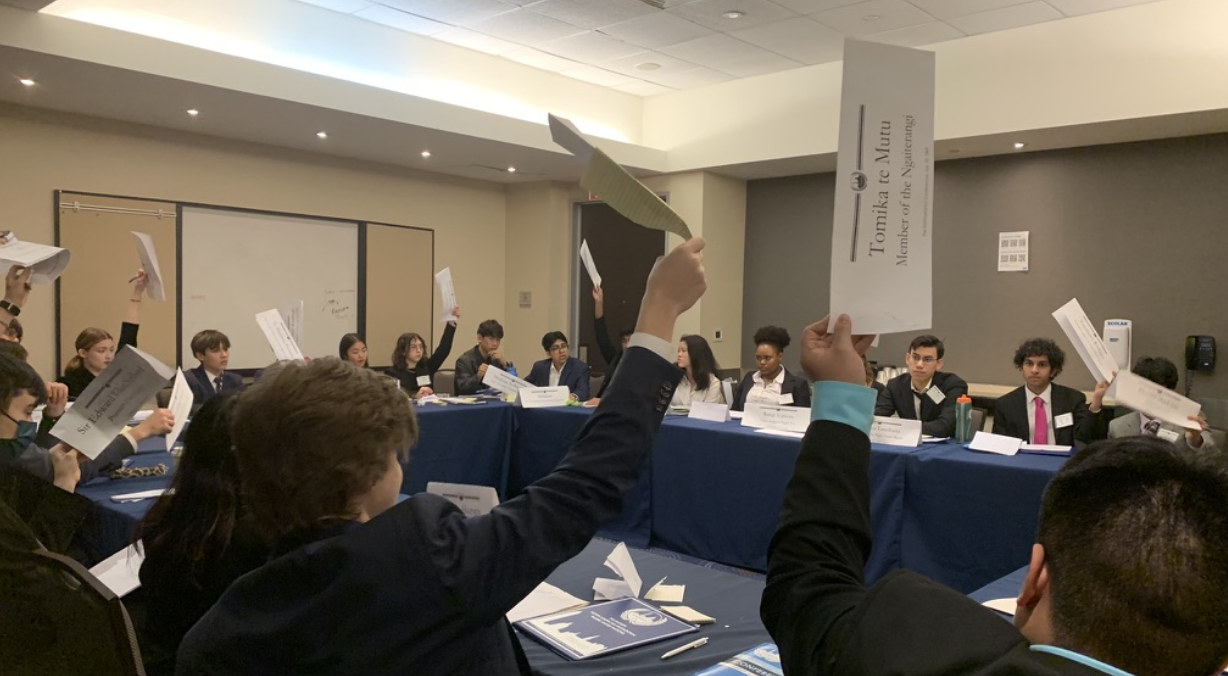
The Kohimarama delegates vote against the “executive use of railroads” directive on the floor, with an overwhelming majority denying its passage.
These outcomes are not encouraging for the future of the Kohimarama Conference. Should representatives of the British and Maōri peoples continue to reject compromise and succumb to infighting, any hope of lasting peace is unlikely, both with respect to French involvement and in the Kohimarama Conference itself.