Aurora Lai, Press Corps 2
UNSC, Historical Crisis — The inaugural trans-African musical festival on February 19th, 1966, a celebration boasting intercultural music sensations and figures, such as the Beatles, turned to be merely a facade for three unknown perpetrators to assassinate the Democratic Republic of Congo’s (DRC) President Mobutu. In the aftermath of his death, the committee discovered that three nations, two being European, have their troops stationed along the western border. A coincidence? The delegates think not.
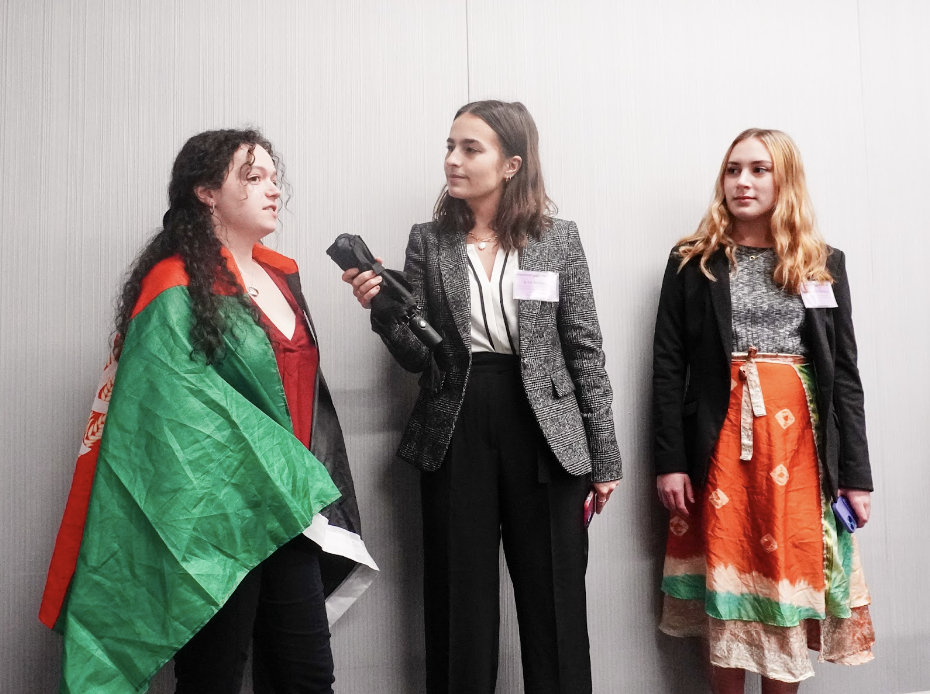
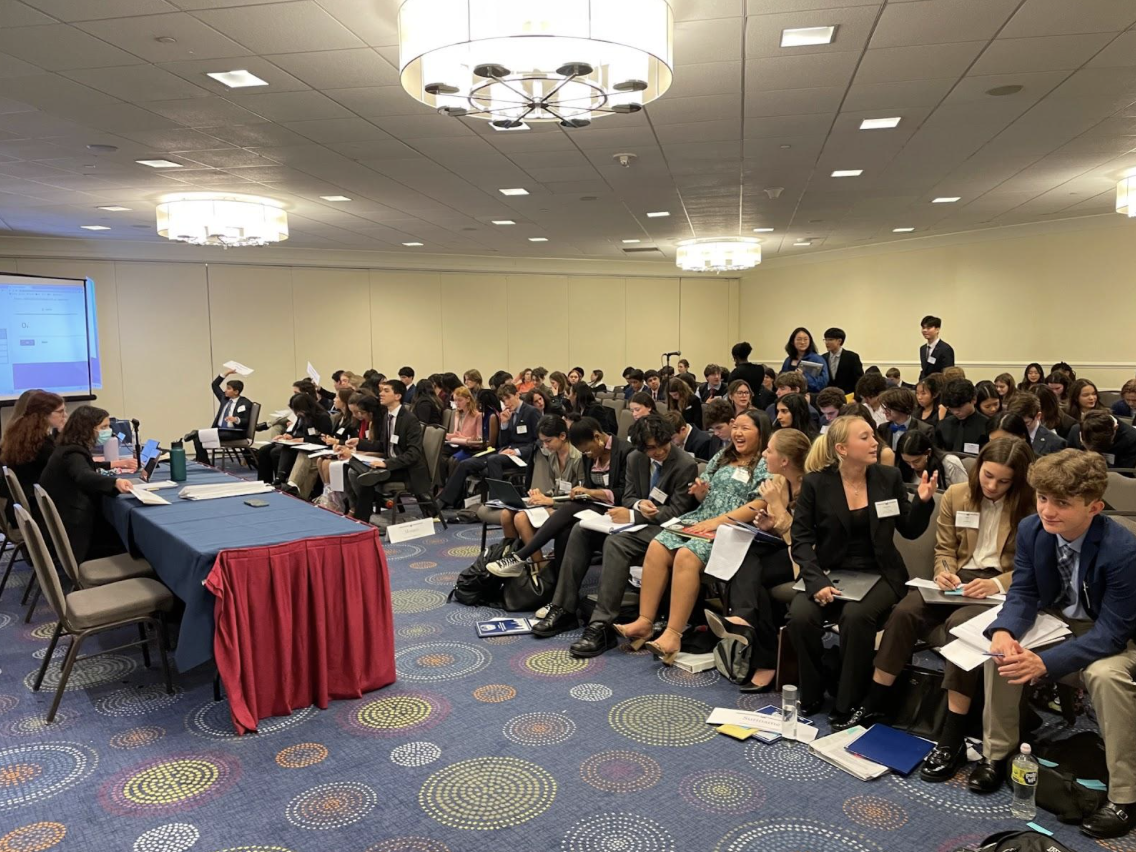
Still, with the fragility of the nation in the hands of this committee, the Security Council wasted no time attempting to resolve the utter disarray that followed Mobutu’s murder. As a unified front, the delegates proposed the “UN Electoral Oversight Division” directive, composed of 25 member states and designed to train the Congolese people how to conduct free and fair elections. Despite the committee’s persistence for a truly democratic government in the DRC, the directive ultimately failed. The NAIMUN Daily had the opportunity to sit down with delegates to discuss the remaining potential of this goal and whether they believed other nations would take advantage of the DRC’s instability.
“Honestly, we’ve seen them amassing troops before any real action has occurred,” expressed the delegation of Mali. “It’s hard to believe that some other countries aren’t doing something with this coincidental power vacuum.”
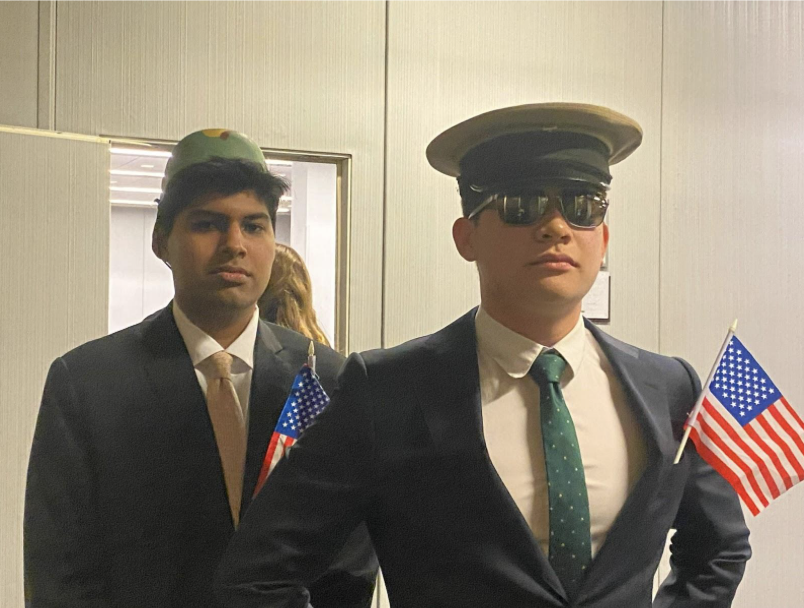
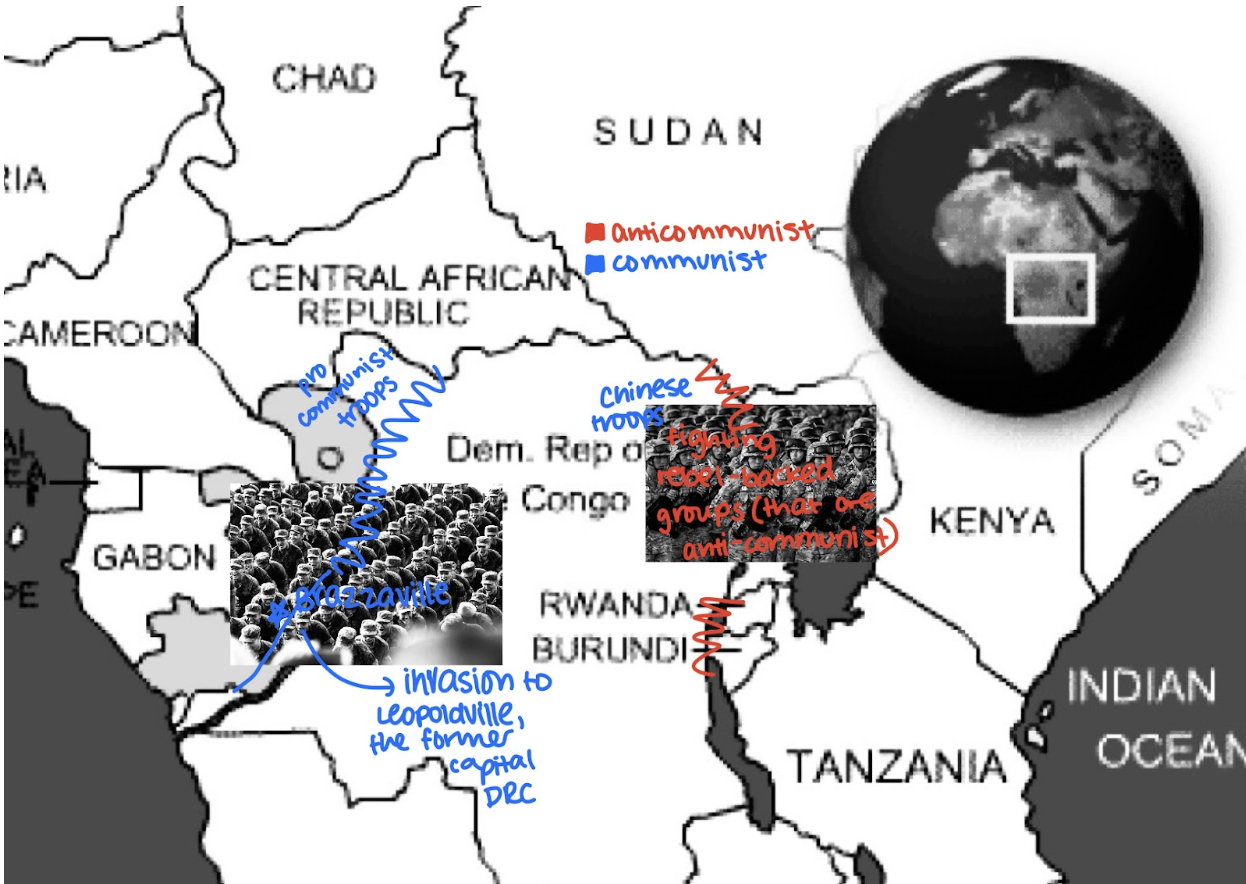
Mali’s suspicion was entirely correct. As some delegations secretly vied for Mobutu’s empty throne, others weren’t as cautious. One interviewed delegation revealed an open plan for the supposed “Mufasa communist invasion” of the Congo. Similarly, the delegates of Nigeria and the United States of America weren’t afraid to admit their attempts at an anti-communist coup in the DRC, where their military troops would dress as pirates—a disguise meant to parallel that of the President of the Republic of Congo’s (ROC) forces in Brazzaville, part of the 1/3 of the DRC captured by the ROC just the night before.
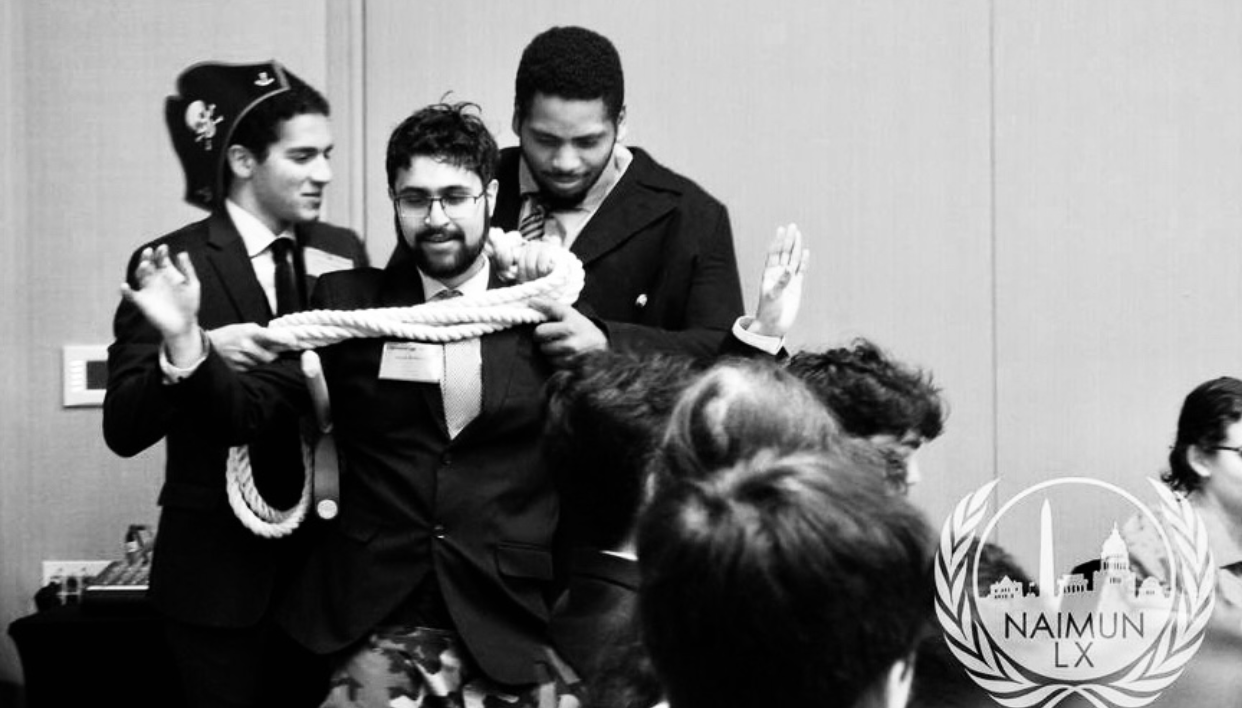
Despite speculations over failed coup attempts by different delegations, the catalyst for the 2nd Congo Crisis brought an unexpected and unprecedented wave of terror for the Congolese people as the UNSC split between the communist-infused ROC/Western DRC and anti-communist eastern DRC. The country has indisputably descended into complete chaos with several international agents declaring the DRC as a failed state, leaving its future in serious jeopardy.
In the eastern bloc associated actors, the delegations of Mali, USSR, Uganda, China, Uruguay, Bulgaria, and Nigeria sponsored the Brazzavillian occupation of the DRC’s capital, inputting Raman Bellum, a Soviet-backed leader, as its de facto leader. Unlike the other pro-communism delegations, Chinese forces are not stationed in Brazzaville; rather, Chinese troops are currently fighting to maintain communist rule in the eastern DRC by diverting the anti-communist efforts of rebel groups backed by the United Kingdom and France.
As the delegation of Jordan clarified for the NAIMUN Daily, referring to the moral correctness of infringing on another state’s sovereignty, “When they go low, we go high.”
Beyond the trans-African festival and failed coups, the 2nd Congo Crisis has initiated a split within the UNSC itself, shattering the cries for democracy that this committee seemed adamant on answering.
The future for the DRC seems narrow, and in this two-way crossroad, it’s uncertain which would be deemed “the high road.”